Branded Residences in Istanbul: What the Brand Adds and What to Check Before You Buy
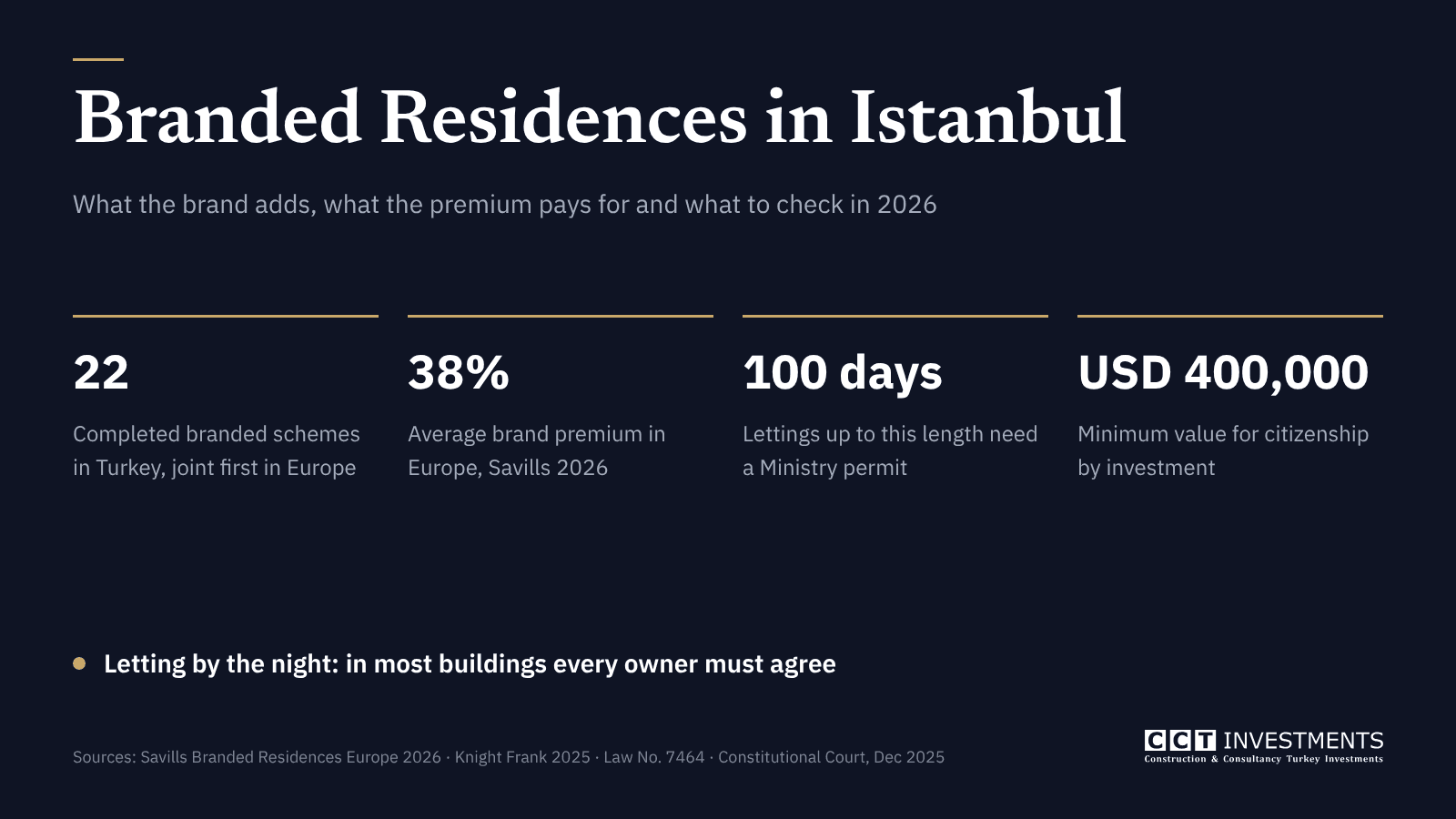
A branded residence is a home sold with the name, design standards and services of a hotel or lifestyle brand. Turkey has more of them than almost any country in Europe: 22 completed schemes at the start of 2026, joint first with the United Kingdom, according to Savills, and Istanbul is second only to London among European cities.
The brand comes at a price. Savills puts the average brand premium in Europe at 38%. This guide explains what that premium pays for, where the brand's role ends, why Turkey's 2024 rules on short-term letting matter to anyone counting on rental income, and what we check, as of November 2026, before a client buys a branded home in Istanbul.
The short answer
| Question | Answer |
|---|---|
| What is it? | A home sold under a hotel or lifestyle brand, with that brand's design standards and, usually, its services |
| How many in Turkey? | 22 completed schemes at 1 January 2026, joint first in Europe with the UK; 22 more in the pipeline (Savills) |
| The premium | 38% on average in Europe, 33% worldwide, by Savills' measure |
| Who owns and builds it? | Usually a local developer. The brand is often licensed, and the brand owner may not own, build or sell the homes |
| Can it be let by the night? | Only with a permit from the Ministry of Culture and Tourism, under Law No. 7464 in force since 1 January 2024 |
| Citizenship | Possible, like any property worth at least USD 400,000 |
| The key documents | The brand agreement terms, the building's management plan and the yearly service budget |
What a branded residence is
In most branded projects the developer and the brand are different companies. A Turkish developer buys the land, builds the towers and sells the homes. The brand, most often an international hotel group, licenses its name, sets design and service standards and, in many cases, runs the services for the owners.
The JW Marriott Residences Tarabya show how this works. The project is developed by Gül İnşaat and Aslanlar Grubu, and the developer's website states that the brand is used under a licence from Marriott, which does not own, develop or sell the residences. That is the normal model, not a weakness. But it means the promises in the sales brochure come from the developer, and the brand's role is set by a contract you will usually not see.
Most branded homes worldwide carry a hotel name. Knight Frank's 2025 survey found that 83% of existing branded residences are hotel brands, and in Istanbul most of the best-known schemes stand next to, or inside the same complex as, a hotel of the same name.
Istanbul's place in the market
Savills counted 910 branded residential schemes worldwide by the end of 2025, up from 764 a year earlier. In Europe, its 2026 report puts Turkey at the top with 22 completed schemes, level with the United Kingdom, and expects Turkey to double that to 44 in the next five years. Turkey and Spain have the largest pipelines in Europe, with 22 projects each, and London leads the cities, "closely followed by Istanbul".
For a buyer, that depth is useful. Istanbul offers branded homes from finished towers with a resale history to off-plan projects due in 2026 and 2027, at very different price points, so you can compare like with like before you pay a premium for a name.
What the premium pays for
Savills' 2026 Europe report puts the average brand premium at 38%, up from 29% a year earlier, against a worldwide average of 33% in its 2025 analysis. An average hides a wide range, and a premium only holds if the buyer who comes after you will pay it too.
In practice, the premium buys three things:
- Standards. The brand sets rules for design, materials and finishes, and checks them before its name goes on the building.
- Services. Concierge, housekeeping, in-residence dining, spa and pool access, run by the hotel team or under its supervision. Some services are in the service charge; others are paid when used.
- The name at resale. A recognised brand can make a home easier to sell to international buyers, as long as the brand is still on the building and the services are still running.
"When a client compares a branded tower with an unbranded one next door, I ask for three documents side by side: the terms of the brand agreement, the building's management plan and the service budget. The name on the roof is the same for every owner. What you actually get as an owner is in those papers, and it differs a great deal from one project to the next." — Cenan Can Tekin, Founder & General Manager, CCT Investments
Where the brand's role ends
A brand agreement is a commercial contract with a term, conditions and an exit. Brands can leave a project and projects can change names: Bomonti Residences by Rotana was first launched as Nidapark Bomonti before it took the Rotana name. Before you pay a premium, ask the developer in writing:
- Who holds the brand licence, for how long, and what happens to the name and the services if it ends.
- Which company will manage the building after handover, and whether the owners can change it.
- Which services are included in the service charge, which are paid when used, and who sets the prices.
- Whether the homes are part of the hotel's licensed facility or ordinary residential units in a separate building.
The answers are in the sales contract, the brand's own documents and the building's management plan (yönetim planı), which binds every owner. Our guide to occupancy permits and condominium titles explains why the type of title also matters.
Service charges
In a branded building the yearly service charge (aidat) pays for the staff and facilities that make it branded, so it is higher than in an ordinary tower. There is no published benchmark for Istanbul, and we do not quote one. Ask for the current yearly budget, the charge per square metre, how it has changed over the last two or three years, and whether a reserve fund exists for the pools, lifts and façade. Count the charge against the rent you expect: our guide to rental yields in Istanbul shows how quickly running costs change a gross yield.
Letting a branded home: the 2024 rules
Many buyers expect to hand the keys to the hotel and let the home by the night. Since 1 January 2024, Law No. 7464 has governed every letting of a home for up to 100 days. Before such a rental, the owner needs a permit from the Ministry of Culture and Tourism, and the application requires a unanimous decision of all owners in the building. In a compound of several buildings, only the building with the rented home counts; the Constitutional Court upheld that part of the law in a decision of 25 December 2025.
For high-end residences, the Ministry also allows the permit to be issued to a licensed management and marketing company, which is how a rental programme run by an operator can work. Whether a project has such a structure, and on what terms, is something to see in writing before you buy. Rental income is taxable in Turkey; see our rental income tax guide.
"Many buyers are sold a rental story with the keys. Since 2024, letting by the night depends on a permit and, in most buildings, on every owner in the block agreeing. Before a client pays for that story, we ask the developer to show in writing who will hold the permit and on what terms. If the answer is vague, we value the home as one you will live in or let for a year at a time." — Cenan Can Tekin
Branded residences and citizenship
A branded home can be used for Turkish citizenship by investment like any other property. It must be worth at least USD 400,000 in the title deed, in your bank transfers and in an official valuation, and a no-sale commitment for three years is annotated on the title. Every project below starts above that threshold. Our citizenship page explains the process, and our guide on new-build vs resale for citizenship the extra checks for a resale home.
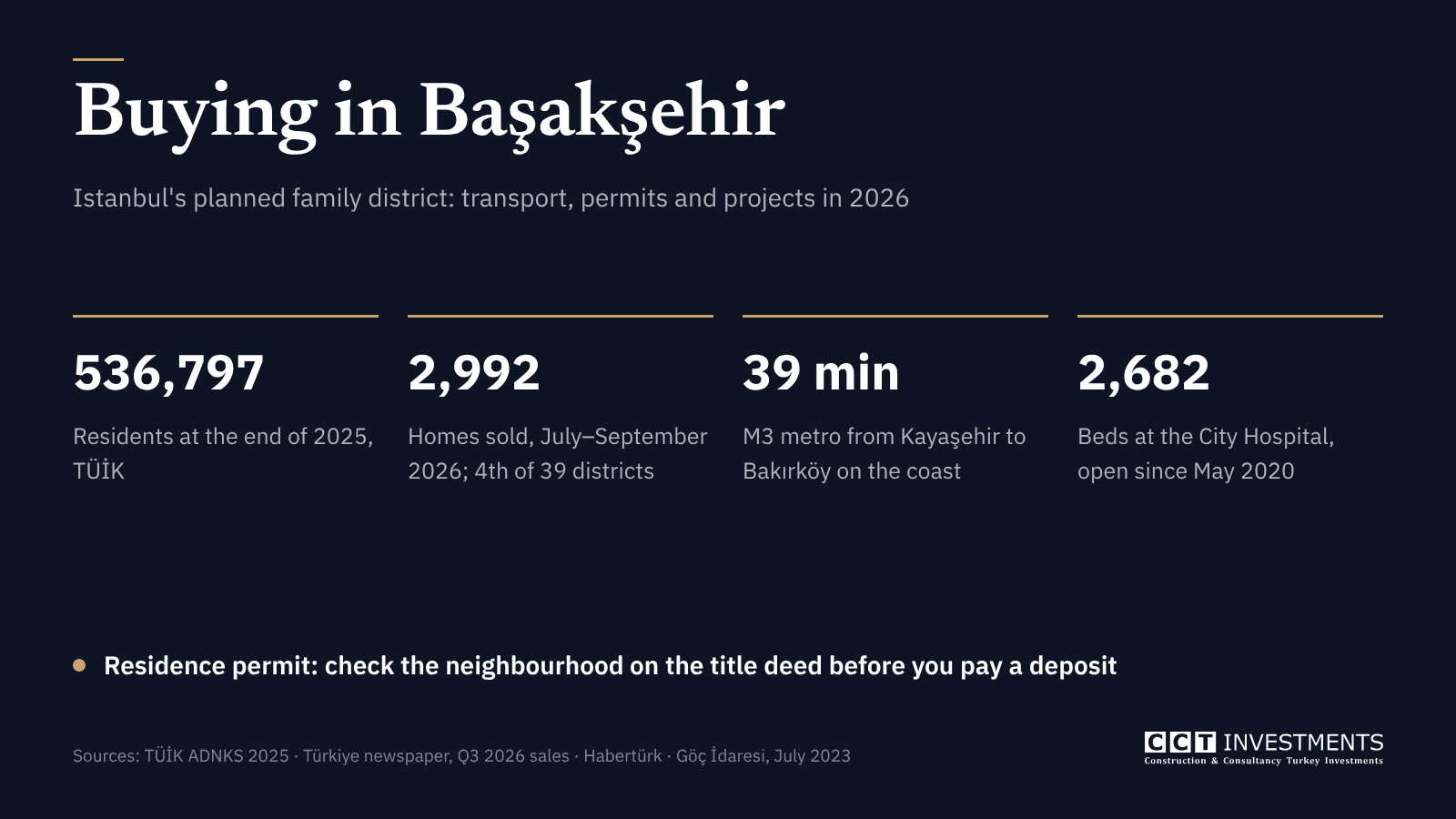
For a residence permit through property, the address and the type of title both matter. Our residence permit guide has the rules; confirm the address with the migration office before you pay a deposit.
Examples from our listings
Six branded projects on our listings show the range in Istanbul:
- Bomonti Residences by Rotana, Şişli. A residential tower beside the Hilton Istanbul Bomonti, with Arjaan hotel services for residents. From USD 455,000.
- G Wanda Vista Istanbul, Mahmutbey. A hotel and residence tower whose hotel opened on 1 October 2021, Wanda's first hotel in Europe. 320 homes. From USD 525,000.
- Fairmont Residences Quasar Istanbul, Mecidiyeköy. 64 residences in the hotel tower, finished, with the hotel open since January 2017 and services managed by Fairmont. From USD 647,000.
- JW Marriott Residences Tarabya, Sarıyer. 215 apartments from 1+1 to 4+1 in two towers above the Bosphorus, complete and ready for handover. From USD 840,675.
- Tersane Istanbul, Golden Horn. The first Rixos-branded residences in Istanbul, serviced and furnished, on the former Ottoman shipyards; the Rixos hotel opened in September 2024. From USD 985,200.
- Mandarin Oriental Etiler, Beşiktaş. 318 residences in two towers beside the hotel, under construction, with handover planned for March 2027. Prices on request.
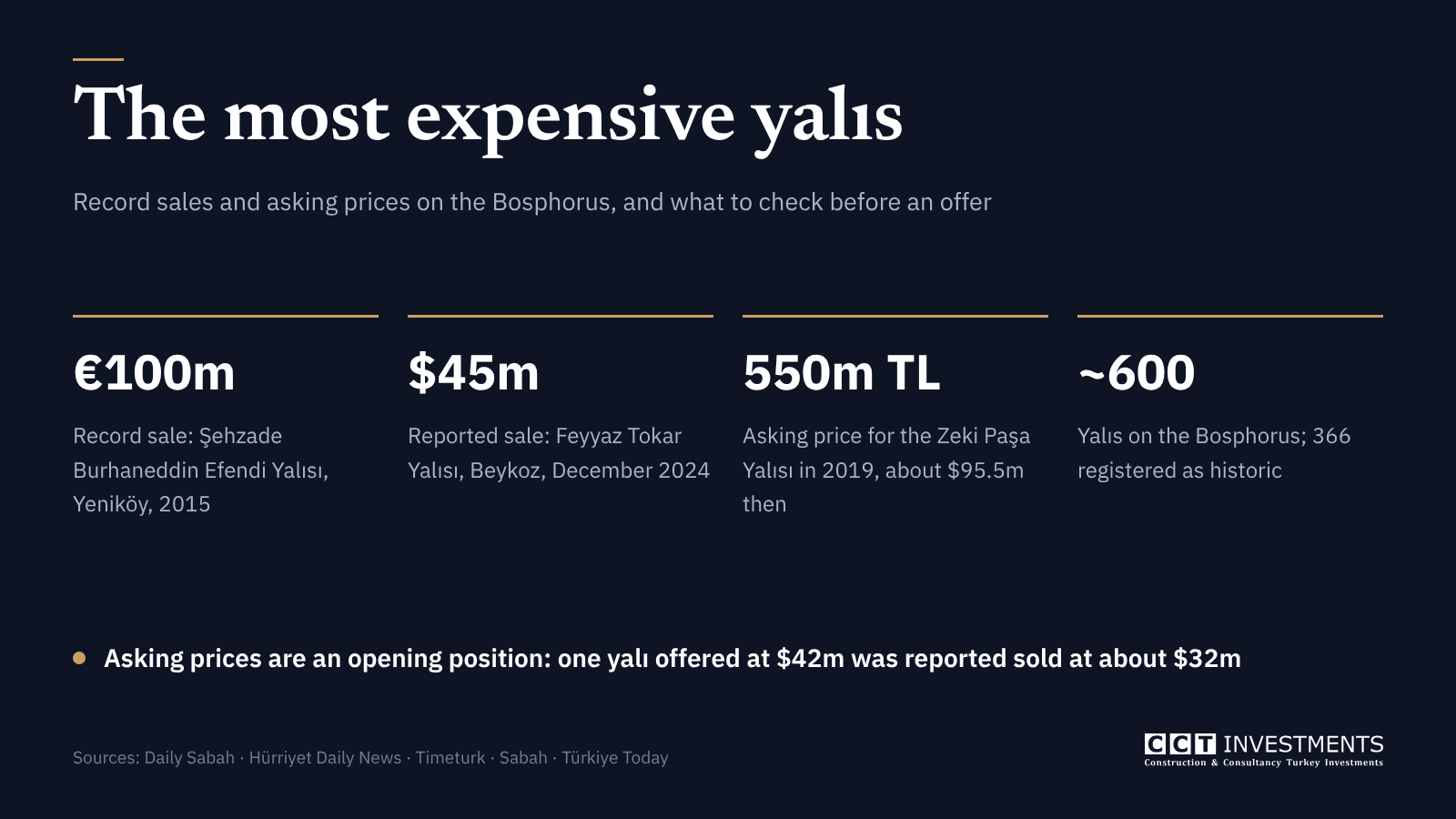
For the top end of the waterfront market, see our guide to the most expensive yalıs on the Bosphorus.
Before you buy a branded residence: checklist
- You know which company owns and builds the project and which company holds the brand, and you have seen the brand's own listing of the project.
- You have the terms of the brand agreement that concern owners: its length, the services it covers and what happens if it ends.
- You have read the management plan and know who manages the building after handover.
- You have the current yearly budget and service charge, and a list of services that are included and those that are paid when used.
- If you plan to let by the night, you know who will hold the Law No. 7464 permit and on what terms.
- You have compared the price with unbranded homes nearby and with resales in the same building, not only with the developer's list.
- For citizenship, the price, your transfers and the official valuation each reach USD 400,000.
Frequently asked questions
What is a branded residence?
A home sold under the name of a hotel or lifestyle brand, built to that brand's standards and usually served by its staff. In Istanbul most are developed by Turkish companies under a licence from an international hotel group.
Are branded residences in Istanbul a good investment?
They suit buyers who value services, security and a known name, and who will pay a higher service charge for them. Judge each project as a home first: location, building, service charge and the price of unbranded homes nearby. The brand premium holds only if the next buyer will pay it.
Can I rent out a branded residence in Istanbul on a nightly basis?
Only with a permit from the Ministry of Culture and Tourism under Law No. 7464, which in most buildings requires the unanimous consent of all owners. Some high-end residences use a licensed management company that holds the permit. Ask for the arrangement in writing.
Can I get Turkish citizenship by buying a branded residence?
Yes, if the property is worth at least USD 400,000, confirmed in the title deed, your bank transfers and an official valuation, and you accept the three-year no-sale annotation.
Does the hotel brand own the building?
Usually not. In most Istanbul projects the brand licenses its name and may manage the services, while a local developer owns and sells the homes.
If you are considering a branded home in Istanbul, our Buyer Guide explains how we work, or contact us.
This guide gives general information and is not legal or investment advice. Brand agreements, letting rules and prices change; check the current position for the project and your plans before you buy.
Sources
- Savills: Branded Residences Europe Report 2026, data as at 1 January 2026
- Savills: global branded residences segment expected to grow 19% in 2025, 16 December 2025
- Savills: branded residences sector set to record 19% annual growth, 3 February 2026
- Knight Frank: The Global Branded Residence Survey 2025, 8 September 2025
- Constitutional Court of Türkiye: decision E.2025/147, K.2025/275 of 25 December 2025 on Law No. 7464, Article 3(3)
- Resmî Gazete, 2 November 2023: Law No. 7464 on the rental of residences for tourism purposes
- Ministry of Culture and Tourism, Istanbul: tourism-purpose rental of residences, permit rules and documents
- Hukuki Haber: how the permit system for tourism-purpose rentals works, 4 November 2023
- Harbiye Hukuk: Law No. 7464 and the permit requirement, September 2026
- Mevzuat: Regulation on the Implementation of the Turkish Citizenship Law (Article 20)
- Your Key Türkiye (Land Registry): acquiring citizenship through property
Property finder
Not sure which project fits you?
Answer a few quick questions and see the projects that match your goal, budget and area.