Buyer Guide

Everything you need to know before buying a property in Turkey as a first-time buyer

House Buyer Guide

At a glance

  • Flexible payment plans: usually 25% to 50% down payment and 24 to 60 months of instalments
  • Promising new projects, with the same prices and conditions for foreign and Turkish buyers
  • Buying a property can make you eligible for a renewable Turkish residence permit
  • Once you decide, the title deed transfer can be completed in a single day

Guide for First-Time Property Buyers in Turkey

We advise you to read this guide to learn the whole process of buying a property in Turkey: the steps, the costs, the taxes and the documents you will need.

How to Buy a Property in Turkey as a Foreigner?

The buying procedures are exactly the same for foreigners and Turkish citizens. Once you decide between the properties you have seen, the paperwork can usually be completed in one day.

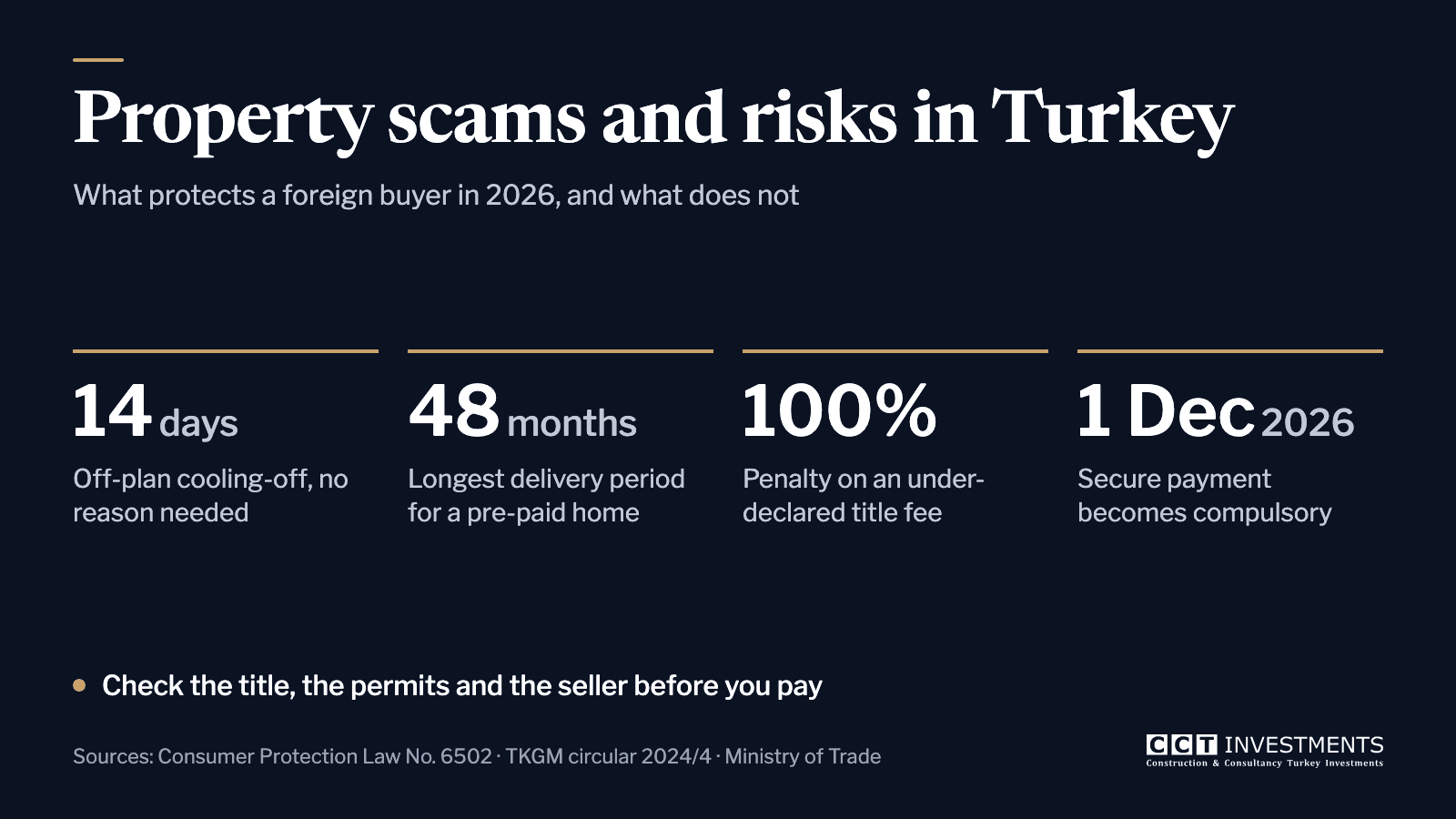
When you buy an off-plan property from a developer, you pay a refundable reservation fee, usually 1% of the sales price. This gives you a two-week reservation period to sign the sales contract and make the down payment. A payment plan is usually offered: the down payment is at least 25%, and the instalments can be spread over 24 to 60 months, depending on the project. The title deed is given when you complete all your payments. If you pay in cash (which can bring a notable discount), the title deed application can be made directly, if the project's title deeds are ready at that stage.

When you buy a completed property from a developer, cash payment is requested in most cases, but a payment plan can still be possible. If you pay in cash, the title deed application is made directly. With a payment plan, a 1% reservation fee is paid, a sales contract is signed, and the title deed is issued once the payments are completed.

When you buy a completed property from an individual, the payment is always in cash. The reservation fee is agreed between the two parties, depending on how much time the buyer needs to decide and prepare the payment, and it may be non-refundable, so the conditions should be clear from the beginning. Unlike buying from a developer, a service fee of 2% + VAT is paid for resale properties. When the payment is ready, the title deed transfer can be completed the same day.

What are the Steps to Buy a Property in Turkey?

  1. Step 1. Contact Us and Discuss Your Requirements with a Property Consultant

    When you fill in the contact form, one of our experienced property consultants will call you within 24 hours. We will first listen to your requirements and expectations. In this first call, we need your answers to the following questions:

    - What is the purpose of your purchase?

    We need to know whether you are buying for investment, for personal use (as a holiday home, for example) or for a citizenship or residence permit application.

    - Where are you planning to buy a property?

    We need to know in which city you plan to buy. If it is Istanbul, we will ask whether you have a preferred district.

    - What is your estimated budget?

    Knowing how much you plan to invest lets us narrow down the options we offer you.

    - Do you have any other specific requirements?

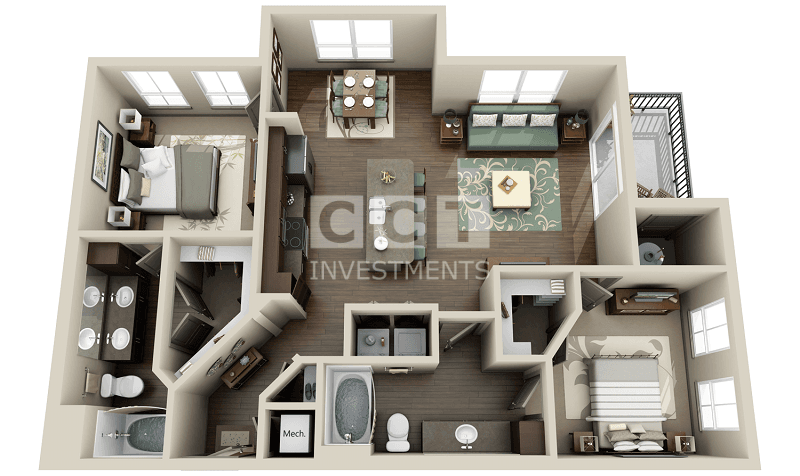
    Our consultant will ask about the property you have in mind: the number of bedrooms and bathrooms, a closed or open kitchen, a balcony, a sea or forest view, a compound, facilities and so on.

    - When are you planning to visit Turkey?

    Knowing when you plan to visit lets us set appointments in advance and be prepared for your visit.

    After this call, our property consultant stays in touch with you until you visit Turkey, and sends you every property offer that matches your needs by email or WhatsApp, as you prefer.
  2. Step 2. View the Properties You are Interested in

    Before you arrive, we will have already arranged the viewings of the properties you want to see. Our property consultant can pick you up from your hotel and visit all the projects with you. In each project, you get a detailed presentation of the project, the apartments and the location if you wish. During the tour, you can ask our consultant anything about the real estate market in Turkey, so that no question mark remains.

    Usually, we can visit all the properties you would like to see in one or two days.

  3. Step 3. Reserve the Property and Sign the Sales Contract

    Once you decide to buy, you reserve the property with a reservation fee, which in most projects is 1% of the sales price. It can also be paid by credit card and is usually refundable for two weeks. This gives you two weeks to make your final decision, sign the sales contract and transfer the down payment.

    As most of our clients visit for less than a week, they usually reserve a property and sign the sales contract during that week, then transfer the down payment by bank transfer from their country.

    The reservation and the sales contract can normally be completed in one day. If the contract will be signed at a notary, you first need a Turkish tax number and a notary appointment; if needed, this is completed the next day.

  4. Step 4. Complete Your Payments and Receive Your Title Deed

    If you agree on a cash payment, you pay the full price at once. If you agree on a payment plan, you pay the down payment first and then the instalments monthly or quarterly, as agreed. The title deed application is made once all payments are completed.

    Before leaving Turkey, you can give our company a power of attorney (POA) to follow all the title deed procedures on your behalf. You can also prepare the POA at the Turkish consulate in your country and send it to us by post. Your title deed will then be prepared on your behalf and handed to you or sent to your address, as you wish.

    If you buy a completed or resale property and pay in full during your stay, the title deed can be transferred to you in one day.

    Buying a property in Turkey is a simple process for foreign investors. With our guidance, we make it even easier, and help you choose a property with a good future return. Our aim is the highest satisfaction of our clients and a long-lasting relationship with them.

What are the Advantages of Buying a Property in Turkey?

  • Residency: buying a home can make you eligible for a renewable Turkish residence permit (see the conditions below).
  • Citizenship: you can apply for Turkish citizenship when you buy property worth at least USD 400,000 and keep it for three years.
  • Low Taxes: taxes are lower in Turkey than in many other countries, and there are incentives for foreign investors, such as the VAT exemption on new homes bought from the developer.
  • Full Ownership: properties in Turkey are freehold. When you buy, you get full ownership rights, and your family inherits the property after you.
  • Return on Investment: Istanbul offers rental income and the potential for long-term price growth, especially in developing areas and in projects bought early.
  • Strategic Location: Turkey lies between Europe and Asia, and Istanbul is a hub for the whole region. Istanbul Airport is one of the largest airports in the world, and Turkish Airlines flies to more countries than any other airline.
  • Cost of Living: prices in Turkey are generally affordable; living in Istanbul costs much less than in cities like London and Dubai.
  • Climate: you enjoy four seasons in Turkey. Summers are not too hot, and winters can bring snow without being very cold.
  • Nature and Sea: Turkey is one of the greenest countries in the world, surrounded by the sea in the north, west and south.
  • Food: you will enjoy the rich diversity of Turkish cuisine. Everyone loves Turkish food.
  • Health Sector: healthcare is accessible all around the country at affordable prices.

Documents You Need to Buy a Property in Turkey

  • Your passport (a sworn translator attends the title deed transfer if you do not speak Turkish)
  • A Turkish tax number, which we obtain for you the same day
  • A valuation report by a licensed appraiser if you are buying for citizenship, which we arrange
  • The currency exchange document from a Turkish bank, showing the purchase money was converted into Turkish lira
  • A DASK (compulsory earthquake insurance) policy
  • Recent passport photos, if the Land Registry asks for them
  • A power of attorney, if someone completes the purchase on your behalf

Useful Information to Check Before Buying a Property in Turkey

Closing Costs

When you buy a property in Turkey, some taxes and fees are paid before you receive the title deed.

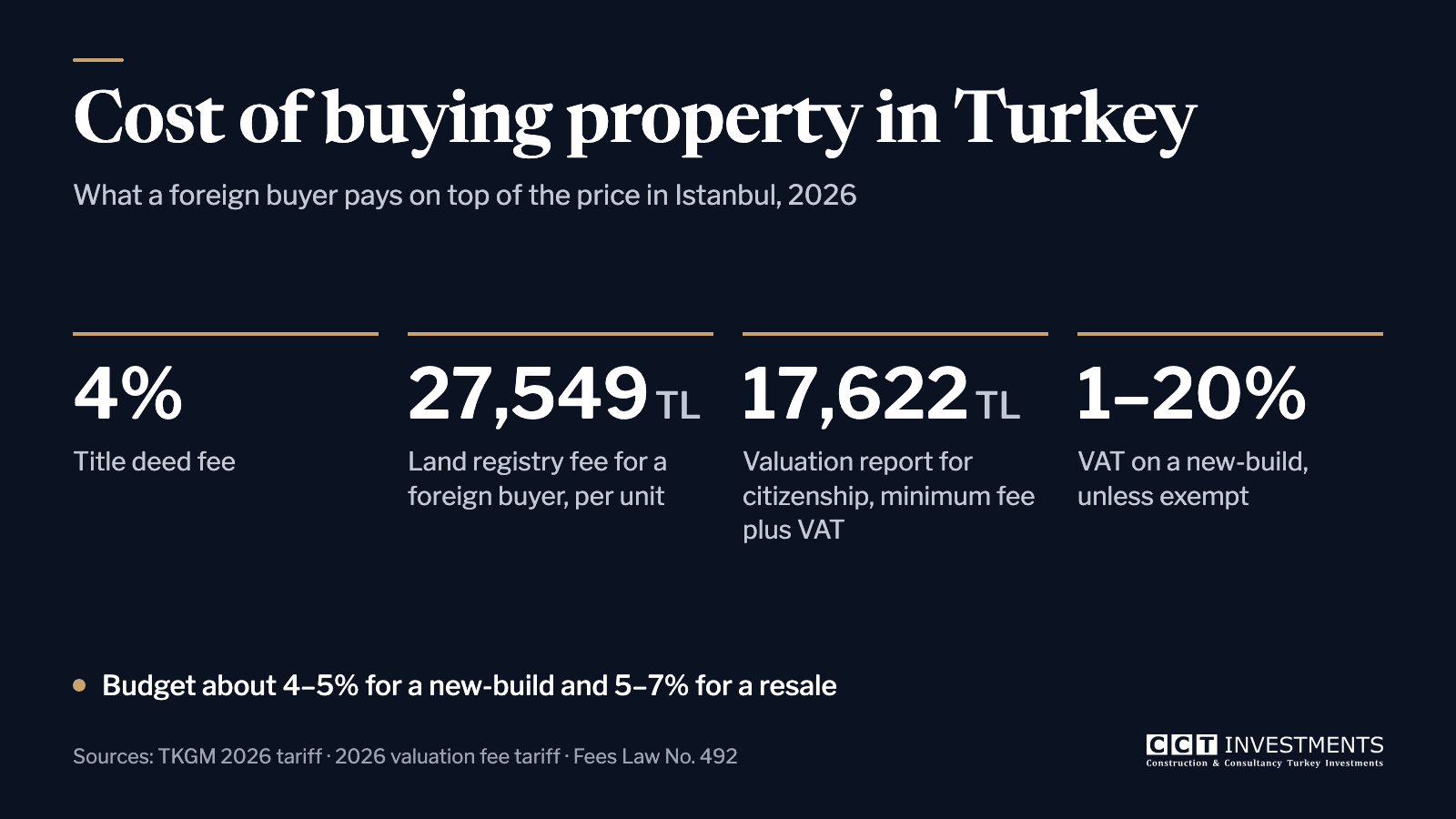
Title deed fee (tapu harcı): 2% – 4%

When a property is sold, 4% of the declared sales price is paid to the state. Usually it is split as 2% for the buyer and 2% for the seller.

VAT (Value Added Tax): 1% – 20%

VAT applies when you buy from a developer. For homes it is 1%, 10% or 20%, depending on the net area, the building permit date and the land value; for commercial units it is 20%. In most cases, VAT is already included in the developer's sales price. Foreign buyers who are not resident in Turkey may be exempt from VAT when they buy a new home from the developer, under certain conditions and however many homes they buy (see VAT exemption for foreign buyers).

Valuation report: from 17,622 TL plus VAT in 2026, for citizenship purchases

A valuation report by a licensed appraiser is required when the purchase is for citizenship, and we arrange it for you. For other purchases the Land Registry no longer asks for one, but you can still order it as a check of the price.

Utilities: usually a few hundred USD

Registering the electricity, water and gas subscriptions for your apartment.

Notary and utility costs are relatively low. For a brand-new property bought from a developer, your closing cost is usually only the 2% title deed fee. For a resale property bought from an individual, the seller may ask you to pay the whole 4% title deed fee; together with the 2% + VAT service fee, the total can then reach about 6% + VAT.

Capital-Gains Tax

Whether you pay capital-gains tax when you sell depends on when you bought the property:

  • Bought before 1 January 2025: if you sell a home after owning it for more than five years, the gain is exempt. In other words, the appreciation is your net profit after five years.
  • Bought on or after 1 January 2025: the five-year exemption no longer applies to homes, so the gain may be taxable whenever you sell.

The taxable gain is calculated after adjusting the purchase price for inflation, and it is taxed at the progressive income tax rates, from 15% to 40%. Our Seller Guide explains the sale side in detail.

Rental Income Tax

Rental income tax is a bit complicated in Turkey, and professional guidance can help you reduce it in legal ways. The rules differ for residential and commercial rentals:

  • Residential rent: there is a yearly exempt amount (it is not available above certain income levels), and you choose between two ways of calculating your expenses: a lump-sum 15% deduction, or your actual expenses. The rest is taxed at the progressive rates, from 15% to 40%.
  • Commercial rent: the tenant withholds 20% of the rent and pays it to the tax office on your behalf; you then declare the income and deduct what was withheld.

The brackets and the exempt amount change every year. For this year's figures and a worked example, see our Turkey Rental Income Tax Guide 2026.

Yearly Property Tax

Property tax is paid to the municipality every year, on the property's tax value (which the municipality sets and which is usually below the market price). The rate depends on the property type and on whether the city is a metropolitan municipality, as Istanbul is. The higher rates below are for metropolitan cities:

For residential properties: 0.2% – 0.1%

For commercial properties: 0.4% – 0.2%

For farmland: 0.2% – 0.1%

For land plots: 0.6% – 0.3%

Example: for a house in Istanbul with a tax value of 1,000,000 TL, the property tax is 0.2%, which is 2,000 TL a year.

Residence Permit Applications

Once you receive your title deed, you can apply for a residence permit in Turkey based on your property. It is not automatic: the property must be a home, it must meet a minimum value (currently USD 200,000), and some neighbourhoods are closed to new residence permits (see which districts are open in Istanbul).

The application is made online through the e-İkamet system and completed at the Provincial Directorate of Migration Management, with your title deed and DASK (earthquake insurance) policy. The permit is usually given for one or two years and can be renewed as long as you own the property.

DASK (Compulsory Earthquake Insurance)

Earthquake insurance is compulsory for homes in Turkey and must be renewed every year. Its cost depends mainly on the total area of the property, its location and the construction type of the building, and it is usually a modest yearly amount.

Contact Us for Free Consultancy

If you are interested in buying a property in Turkey, fill in the form below to get free consultancy. Our experienced team will contact you as soon as possible to help you find the best property that matches your requirements.

We answer in English, Arabic and Turkish.

Frequently Asked Questions About Buying Process

Other Pages You Might Find Useful

Do You Need a Lawyer to Buy a Property in Turkey?

Turkish Residence Permit Through Property Investment

How is Inheritance Law and Inheritance Tax in Turkey?

What is the Real Estate Valuation Report?

How Does the VAT Exemption Work for Foreign Buyers?

What is the Difference Between Gross and Net Square Metres?

Buying a property abroad can sound risky and challenging. But Turkey opens its doors to foreign investors with great opportunities, and we are ready to assist you with a professional, trustworthy and exceptional service.

Are the prices the same for Turkish citizens and foreigners?

Yes. The price lists are the same for Turkish and international buyers. For all the projects we market, you can be sure the conditions are the same for every buyer.

Is the taxation the same for Turkish citizens and foreigners?

Yes. The tax system is the same for Turkish citizens and foreigners. Sometimes the state even offers incentives to foreign investors; for example, under certain conditions foreign buyers can be exempt from VAT on new homes bought from the developer.

What are the penalties if I terminate my sales contract with the developer?

Sales contracts usually include a termination clause. The penalty is typically around 10–20% of the sales price. If the buyer decides to terminate the contract at any stage, the developer deducts this penalty and pays back the remaining amount.

What are my rights if the developer does not complete the project on time?

Sales contracts usually give the developer a grace period after the delivery date, often six months. If the developer still does not deliver after that period, it pays the buyer the monthly penalty stated in the contract. Check this clause before you sign; we go through it with you.

What is the average return on investment (ROI) in the Istanbul market?

It depends strongly on the location and the project. Because the purchase price is high in the old city centres, rental yields there are lower than in the developing areas of Istanbul, where they are usually higher. On top of the rent, well-chosen properties have historically gained value over time. Returns are never guaranteed; we will share recent rents and sale prices for the projects you are considering.

What are the benefits of buying at the early stages of construction?

If you want the maximum possible profit in a project, buy at its launch. In almost every project, the sales prices rise regularly from the first stages until completion.

What do I need to do to reserve a property?

Bring your passport when we visit the projects. You pay 1% of the sales price as a reservation fee, in cash or by credit card. This reserves the apartment in your name, fixes the price and gives you two weeks to make the down payment. The fee is deducted from the down payment.

Is the reservation fee refundable?

In most projects, the reservation fee is fully refundable during the two-week reservation period, so you can cancel for any reason.

Can I buy a property in Turkey with an instalment payment plan?

Yes. Most projects offer an instalment plan that ends with the completion of the project. The down payment is usually between 25% and 50%, depending on the project. Some plans continue after completion, and sometimes there are payment plans for completed projects too.

Can I sell my property before the project is completed?

Depending on the project, you can sell your property during construction. In some cases, the sales contract asks for a 2–3% commission to be paid to the developer.

Can I get a mortgage in Turkey?

To get a mortgage from a Turkish bank, you usually need a regular income in Turkey. As most foreign buyers do not have one, bank loans for foreigners buying property are rarely available. Still, we will support you, as some projects offer their own payment advantages.

What is the maintenance fee for a compound in Istanbul?

It differs from project to project; the more facilities there are, the higher the fee. Compared with cities like Dubai, maintenance fees in Istanbul are very reasonable, often around 1 USD per m² a month. For example, for a 100 m² two-bedroom apartment in a centrally located project, you would pay about 100 USD a month to the management.

What are the yearly costs of owning a property in Turkey?

  • Maintenance fee, often around 1 USD per m² a month
  • Property tax, 0.2% of the property's tax value a year in metropolitan cities
  • DASK (compulsory earthquake insurance), a modest yearly amount

Related articles

Articles
Do you need a lawyer to buy a house in Turkey

Do You Need a Lawyer to Buy a House in Turkey?

The previous years witnessed a noticeable rush by foreign investors to buy real estate in Turkey, due to the development and progress the country is experiencing in addition to the existing investment opportunities. Often when a person wants to own property in his country, he does not need a lawyer to perform all the necessary legal procedures to transfer the property.

What are Gross and Net Square Meters?

What are Gross and Net Square Meters?

In the past, 1+1 apartments were not preferred so much due to thoughts that it would not meet the demand of a family. The most popular apartment types were 2+1 and 3+1. Also, 4+1 apartments were not common either. Checking out the houses built in those years between 1970-2000, almost all of them fits into these statements.

Citizenship

Guide to learn all the process for Turkish Citizenship application with 400,000 USD real estate investment in Turkey from A to Z including FAQ answered.

Seller Guide

How to sell your property in Turkey as a foreigner: the steps, costs, capital gains tax and documents. We handle the sale from valuation to title deed.

Write to us on WhatsApp